

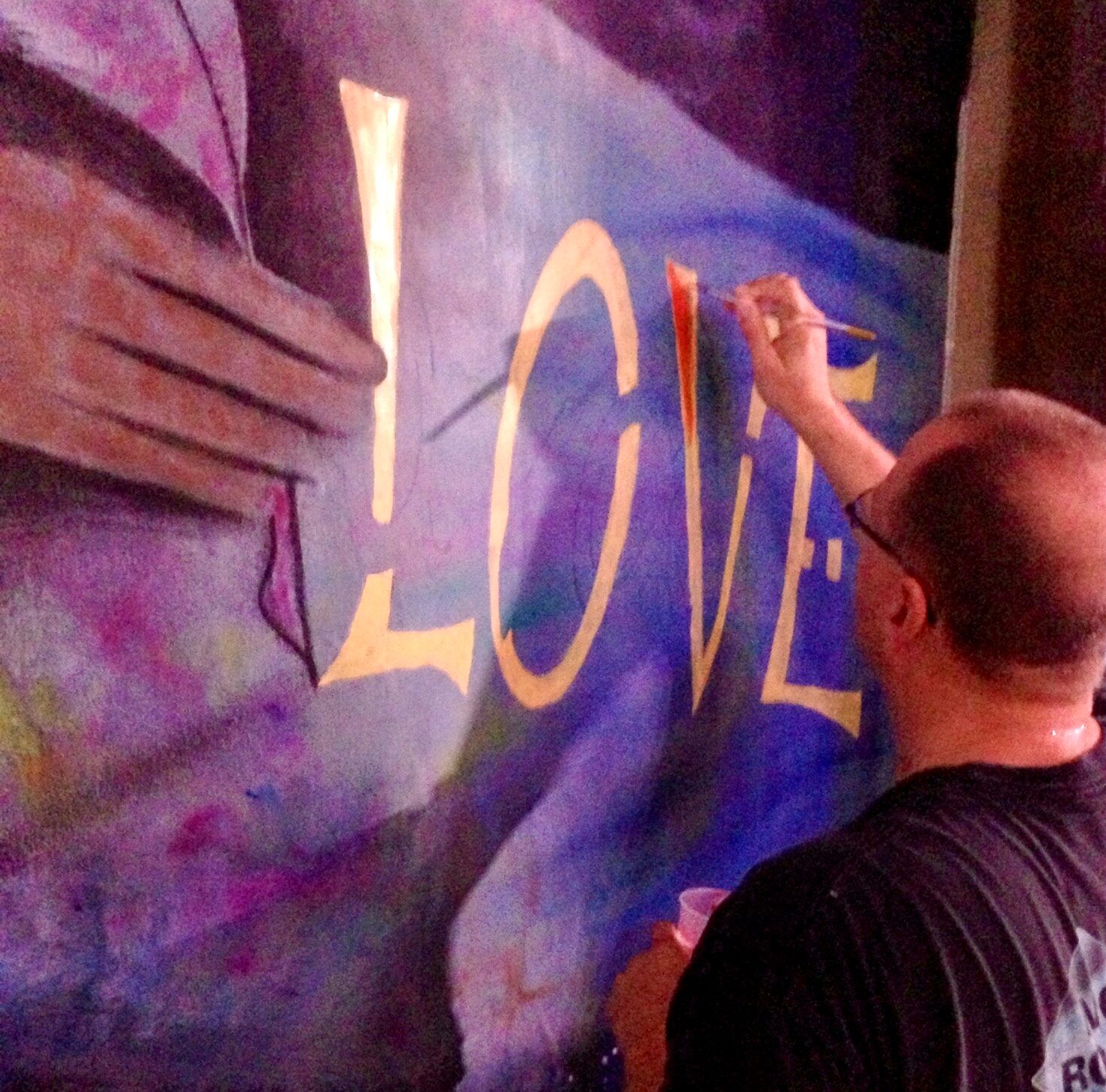
What’s the best way to build something beautiful?
I’ve often thought about the giant cathedrals, stadiums, and buildings people have created through history. We stand inside these magnificent structures and marvel at their beauty, massiveness, and the ingenuity it took to create them.
But I also think about the people who built them.
How many laborers worked themselves to death under crushing expectations? How many people were exhausted, abused, treated as expendable, or literally killed, for the sake of something grand?
I’ll just say it. The world has always made marvelous, magnificent things by treating people badly. Right?
That’s human.
But Jesus teaches a better way.
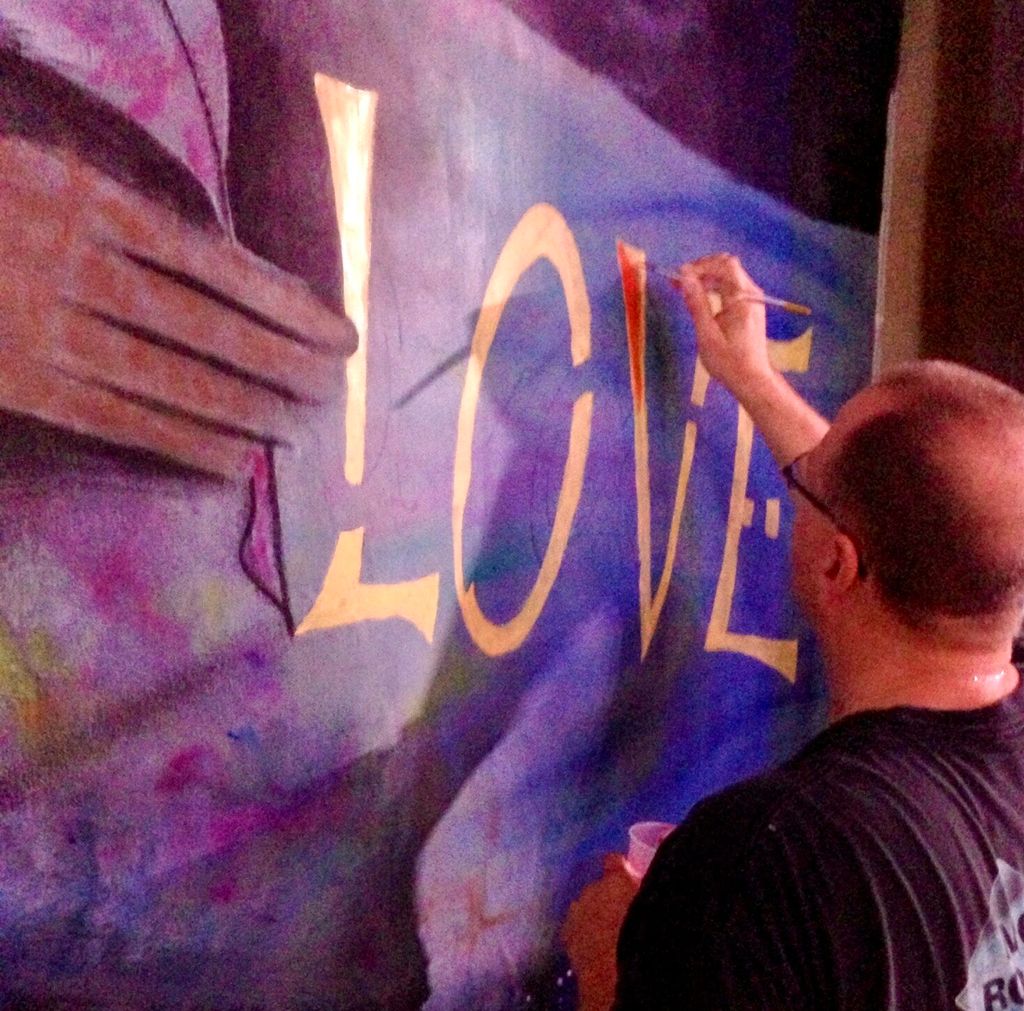
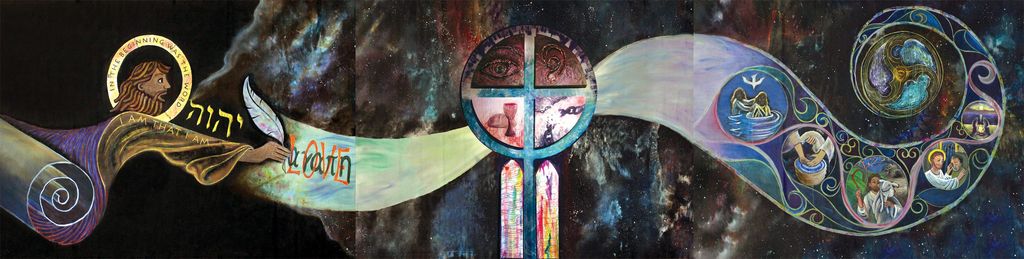
For more than two decades now, I’ve worked in art ministry, leading communities of artists. I’ve seen remarkable exhibitions, workshops, murals, community outreaches, spiritual discoveries, and beautiful works of art that none of us could have created alone.
But the most important things we’ve built together can’t be displayed on a wall or photographed.
It’s the way we treat each other and respond to one another.
It’s the way we love. (John 13:34)
A box of yellow paints
Years ago, our art ministry was moving into our first studio, a little classroom. Overjoyed, our ministry team was transporting art supplies from my garage over to our new shared space.
Finally! A studio of our own! It was an exciting day.
But with a hundred decisions to make, everyone was looking to me for answers.
I grabbed a random box from my car and walked toward the door of the building. This particular box had been donated to the art ministry, and it contained 12 identical bottles of yellow paint.
Carrying it, I glanced down and frowned at the box. How are we gonna use all this yellow paint?
At that exact moment, several people on our team asked me three or four questions all at once.
I didn’t know how to answer any of them.
Right then and there, I had reached my limit.
I stopped, set the yellow paint down on the sidewalk, and began to cry.
Sure, I could have forced myself to get it together, put on a fake face, and pretended I was fine. But I remember thinking: No. If one of our team members were feeling this overwhelmed, I wouldn’t want them to hide it.
I’d want the truth.
I’d want us to stop, gather around them, ask how they feel, pray for them, and show small acts of kindness to let them know they’re not alone.
Since I don’t make exceptions for myself, I chose vulnerability.
They saw my tears, gathered around me, and began to pray.
Their affirming words to The Lord about me were as sweet as honey to my frazzled soul.
My shoulders dropped with relief. They love me — they love me. This is what matters.
All was well.
Soon, we picked up where we’d left off: smiling, wiping our tears, lugging stuff, and helping each other figure out where to store art supplies in our sweet new digs.
Years later, I used the last of that yellow paint. That memory made me smile.
Nothing fell apart because I cried. If anything, the bonds of friendship and understanding had been tested and strengthened.
Leaders, please remember — we are humans with limitations that we need to be honest about.
Even as we build something beautiful.
The courage to be real and honest will draw us closer together.
Pretending divides us.
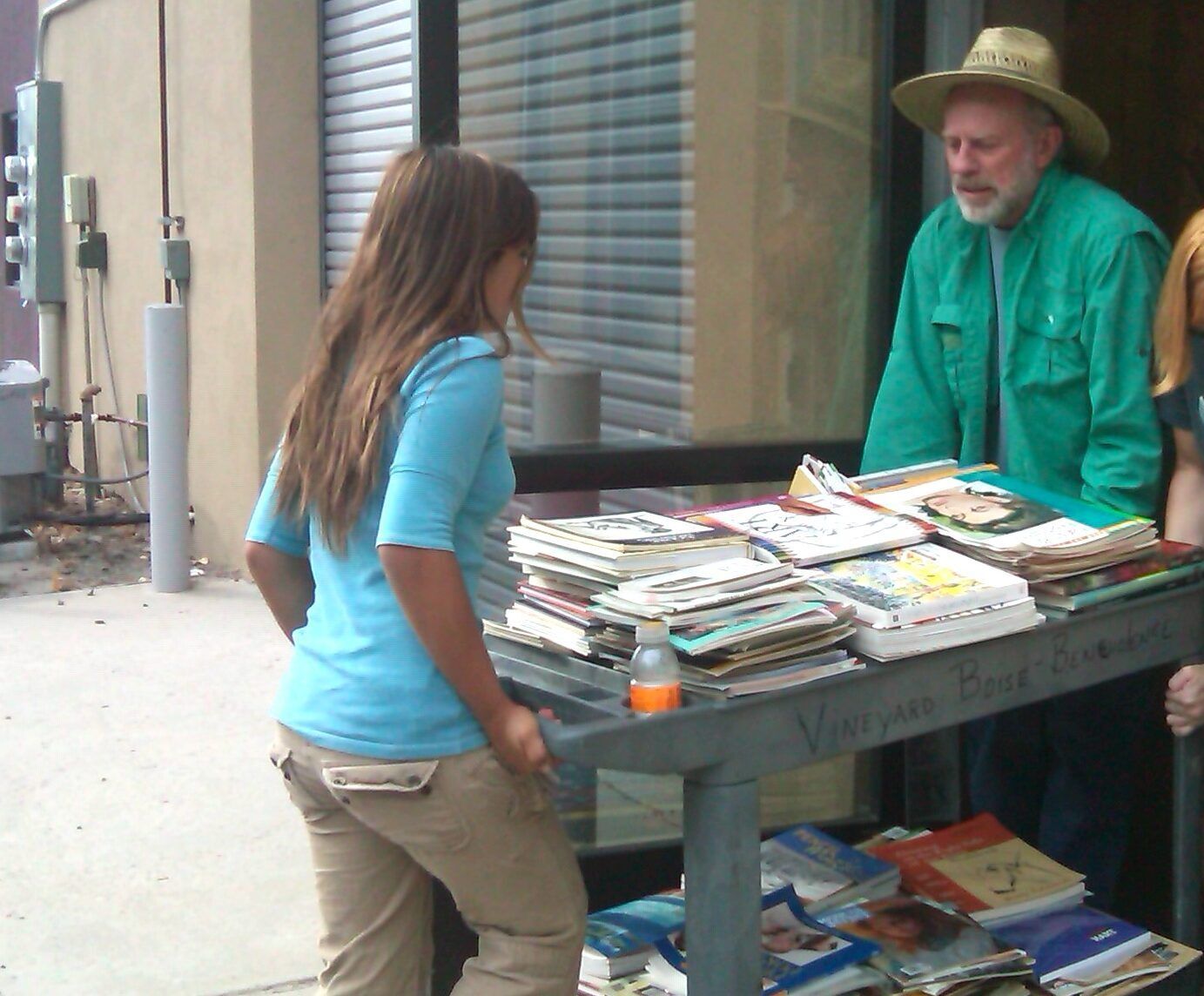
People are not the fuel for our vision
In ministries, nonprofits, and creative communities, we can become hyper-focused on the good thing we’re accomplishing. So we start treating people almost like tasks.
Someone needs to organize supplies, teach the workshop, design the poster, hang the exhibit, or set up the chairs.
Absolutely worthwhile, yes. But people are never resources, no matter what H.R. stands for.
They’re people. Human beings with families, dreams, goals, needs, and lives extending far beyond our shared work.
I remember one volunteer had a difficult day after struggling with an online test that was important to her. She stayed home, discouraged, and wanted to withdraw.
But God gave me an idea.
I made two giant mugs of hot tea, carefully balanced them on my car’s dashboard, drove over, and rang her doorbell.
I didn’t go in order to keep someone volunteering. I went because I cared about her.
Our most important actions are always love.
It’s not a formula. Follow God’s Spirit in you, because God is always site-specific when He builds something.
And God’s church is not made of stone. It’s made of people.
People are worth it every time.
The campfire metaphor
One evening, sitting at a campfire with my husband, I noticed something.
I saw lots of empty spaces between the brightly burning logs. All those spaces made the oxygen flow, which made the campfire burn brightly.
Push the wood too tightly together, and the fire will suffocate. Spread the pieces too far apart, and each log will stop burning, unable to be sustained.
I’ve found creative communities are much the same.
Artists need creative connection, AND each artist needs plenty of space.
We benefit when we inspire each other, create alongside each other, practice community, learn other perspectives, and discover we’re not the only strange and quirky people on the planet.
We also need time apart to make our own art, reflect, write, practice solitude, rest, attend to our families, and follow the particular creative path God has placed before us. This requires much time.
A community that demands constant participation will extinguish the very creativity it hopes to nurture.
If a leader is demanding, controlling, or guilt-tripping, of course people will leave. Why wouldn’t they? Love is not controlling. (I Corinthians 13).
Make sure your questions and requests don’t pressure the people you’re trying to draw in.
Sometimes we’re tempted to lecture, grumble, or air our frustrations with the people we serve, such as, “Why didn’t anyone come to my art workshop?” — please, don’t ever say that.
Why? Artists flee from coercion.
It’s important to acknowledge (to myself and to God) the disappointment I genuinely feel when people don’t show up. It happens to all of us. Process those heavy emotions with God when it happens.
And know how proud Jesus is of you for your willingness to serve.
He sees you. He delights in you.
Time with God is never wasted.

A generous open hand
Love prioritizes each person’s well-being as we serve God alongside each other. We all get to move freely through different seasons of giving and serving.
Years ago, two married friends in our art ministry took a break from serving for a few months while the couple started a business.
Our art ministers prayed over them and blessed their sabbatical.
At first, I deliberately held back from contacting the couple. I assumed hearing from me would remind them of the responsibilities they’d temporarily stepped away from. Nope.
Here’s what I needed to learn:
They needed a break from art ministry, not from being loved.
Turns out they missed community. And in my effort to respect their space, I overlooked the simple gift of our friendship. I won’t do that again.
The best thing you can offer someone who’s on a ministry break isn’t a question about when they’re coming back. Stay in touch with small, wonderful, ordinary things, like meeting for lunch and the funny pair of socks you saw the other day that reminded you of them.
Release them from responsibilities, while drawing closer to the people they are.
Of course, not every relationship becomes a close friendship. That’s neither required nor the way we’re wired. God loves to bring unique, disparate people together to share common communion at His table.
And that will never change.
Build something that belongs to all
There’s another thing that matters deeply to God: the joy of contributing toward something that is genuinely for everyone.
That means listening. Making room for different personalities and creative approaches. Giving people meaningful opportunities to lead, experiment, make mistakes, and discover what they’re capable of.
It means humility and recognizing that often, another person’s idea is better than mine. The thing we create together can turn out differently from what I imagined.
The best art ministry happens through genuine curiosity and conversation, and the question “What if?” Half of my ideas are born out of talking with friends!
Art with God is worth bringing into the world. Art itself is a gift, whether or not it’s attached to a program, cause, or measurable outcome.
So when we create something together, especially in His name, the process needs to reflect the dignity and value of the people participating in it.
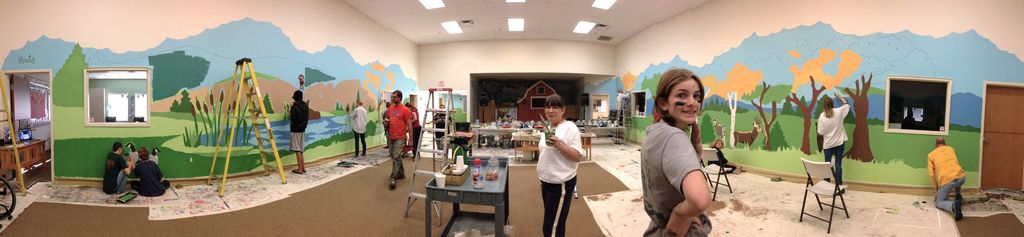
Health, mutual respect, and clear communication are essential. Be an ambassador of hope, grace, joy, and the freedom for people to say no.
If you’re leading, practice not freaking out. Learn to pivot with grace in the details.
Not because it will make people more productive, although healthy communities accomplish remarkable things.
Do it because motives of the heart matter to God, and God loves people more than anything we can possibly create or build.
Even for Him. (Matthew 7:22-23; John 3:16-17; John 17:20-23)
The beauty we leave behind
I love ambitious ideas. I love watching artists dream up projects that seem impossible. I love seeing something grow beyond what any one of us could accomplish alone.
But I’d rather build something small, alongside people who are free to participate from abundance, than create something impressive that leaves people crushed, bewildered, exploited, or depleted.
Sustainable art ministry radiates beauty that touches more lives than you will ever realize this side of heaven. That’s the kind of beauty I want to sustain.
Because ministry never ceases being about people.
And the way we love one another is the best part of what we can create.
“For you were once darkness, but now you are light in the Lord. Walk as children of light — for the fruit of the light results in all goodness, righteousness, and truth — discerning what is pleasing to the Lord.” (Ephesians 5:8-10 HCSB)